Applying Abundance to the Crisis in Higher Education

Could new non-profit universities started by qualified educators be part of the solution to higher ed rising costs and dropping quality?
Picture this: You’re a brilliant educator with decades of experience, a vision for innovative pedagogy, and deep pockets from supportive investors. You want to start a new university. In 1950, you’d be teaching students within months. In 2025? Strap in— you’re in for a regulatory obstacle course worse than trying to build market-rate housing in San Francisco.
Since 1971, the year when the regional accreditation system essentially closed its doors to newcomers, starting a genuinely new university in America has been about as likely as finding affordable student housing near campus. This isn’t hyperbole — it’s the reality of a system that has calcified faster than a chemistry professor’s coffee mug.

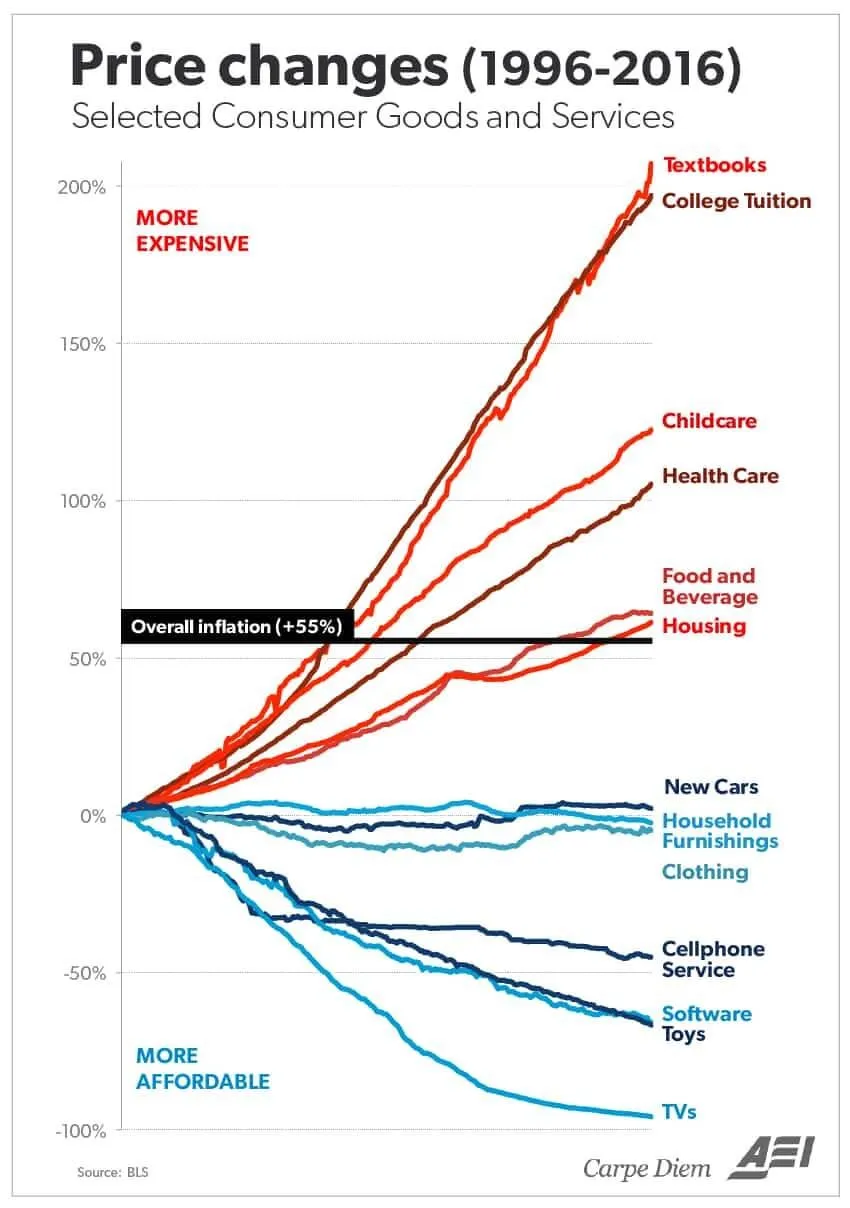
Enter the abundance agenda, developed by Ezra Klein and Derek Thompson. Their core insight is deceptively simple: many of America’s thorniest problems stem not from too much of something, but from artificial scarcity. Housing costs spiral because we can’t build enough homes. Healthcare prices soar because we restrict who can provide care.
I propose that, in the same vein, college has become eye-wateringly expensive because we’ve made it nearly impossible to start new institutions that might — heaven forbid — compete with existing ones.
You can read or listen to my book on this topic: The Caging of the American Mind. Or keep reading!
The Accreditation Cartel (Or: How We Learned to Stop Worrying and Love the Status Quo)
The current system works like this: To grant degrees, you need accreditation. To get accreditation, you need approval from one of six regional accreditors. To get their approval, you need to already be operating successfully for years without the ability to grant degrees. It’s a Catch-22 that would make Joseph Heller proud — or possibly just very depressed about the state of American education.
These accreditors, originally designed to improve higher educational quality, have (de)evolved into what economists politely call “gatekeepers” and what frustrated education entrepreneurs call “the place where innovation goes to die.” They’re like very exclusive clubs where the existing members vote on whether to let in new members who might compete with them for students, funding, and prestige. Shocking nobody, they usually vote no.
The Abundance Prescription: Let a Thousand Colleges Bloom
The abundance approach would flip this script entirely. Instead of assuming we need to carefully ration the privilege of granting degrees, we’d ask: what if we made it easier for qualified educators to start new institutions? Not diploma mills or fly-by-night operations, but legitimate alternatives to the existing system.
Imagine if Dr. Sarah Chen, a distinguished computer science professor fed up with her university’s glacial pace of curriculum reform, could band together with colleagues to create TechForward University — a new institution designed from the ground up for the needs of 21st-century students. Or if a group of master teachers could launch Liberal Arts Reimagined, offering the same rigorous education as elite colleges but at a fraction of the cost by eliminating administrative bloat and country club amenities.
Under an abundance framework, we might replace the current prior-restraint model with something more like restaurant health inspections. You can open your doors and start serving education to willing students, but you’d better maintain quality standards or face consequences. Bad actors would be shut down, but good faith innovators wouldn’t need permission from their future competitors to exist.
But What About Quality? (The Elephant in the Seminar Room)
Critics will object — and not without reason — that loosening accreditation standards could lead to a proliferation of substandard institutions. It’s a fair concern, but it assumes our current system is doing a bang-up job of quality control. Narrator voice: It isn’t.
We already have hundreds of accredited colleges with abysmal graduation rates, questionable educational outcomes, and business models that would make a payday lender blush. The difference is they got their accreditation decades ago and now coast on institutional inertia. Meanwhile, innovative programs that might better serve students can’t even get in the door.
An abundance approach doesn’t mean abandoning standards — it means replacing gatekeeping with accountability. Require transparent reporting on student outcomes. Mandate clear disclosure of costs and job placement rates. Create genuine consequences for institutions that fail their students. But don’t make would-be educators spend years genuflecting before an accreditation board that has every incentive to say no.
The Cascading Benefits of Competition
Here’s where things get exciting. If we actually allowed new entrants into higher education, we might see the kind of innovation that has transformed other industries. Some possibilities:
- Elite-Yet-Accessible — Did you ever consider that a billionaire can’t buy a better phone than a top-of-the-line iPhone, but your Uber driver has the same phone. Isn’t that weird? If qualified educators could start new colleges and universities, there is strong evidence to suggest that the quality of education would improve dramatically and the cost would drop for everyone.
- Micro-universities specializing in specific fields, offering world-class education in, say, data science or sustainable agriculture without the overhead of maintaining a football team and fourteen assistant deans of student life.
- Flexible hybrid models that combine online and in-person learning in ways that incumbent institutions, wedded to their physical plants and semester systems, struggle to implement.
- Employer-partnered institutions that guarantee job placement because they’re designed hand-in-glove with industry needs, not the publish-or-perish incentives of traditional academia.
- Teaching-focused colleges where brilliant educators who actually want to teach (imagine that!) can build institutions around pedagogy rather than research output.
From Ivory Tower to Ivory Towers — Plural
The pun-lovers among us might say it’s time to go from an ivory tower to ivory towers — plural. The monopolistic tendencies of our current system have created a higher education monoculture that serves neither students nor society particularly well.
When you can’t start a new university, existing institutions face little pressure to innovate, control costs, or prioritize student success. They compete on prestige and amenities rather than educational value. It’s like having three phone companies that spend all their money on Super Bowl ads while your calls still drop every time you walk past a tall building.
The abundance agenda offers a different path: trust in competition, innovation, and the radical idea that educators who want to education should be allowed to educate. Yes, we need quality control. Yes, we need consumer protection. But we don’t need a system that makes starting a new university harder than starting a new space company.
The Bottom Line: Time for Some Creative Destruction
Higher education has been largely exempt from new colleges and universities because of regulatory moats that would make a medieval castle jealous. The result? Soaring costs, frustrated students, and an innovation deficit that leaves American education increasingly out of step with American needs.
The abundance agenda offers a way forward. By lowering barriers to entry while maintaining quality standards, we could unleash a wave of educational entrepreneurship that makes college more accessible, affordable, and aligned with the 21st century. Will every new institution succeed? Of course not. But that’s the point — let the market and students decide, not the incumbents.
It’s time to stop treating the ability to grant degrees like plutonium — dangerous and requiring careful control. Instead, let’s treat it like what it really is: a service that society desperately needs more of, not less. The current system has had five decades to prove it can control costs and improve quality through restriction and gatekeeping. The results speak for themselves, and what they’re saying is: “Help, I’m drowning in student loans.”
The abundance agenda says: let educators educate. Let innovators innovate. Let a thousand colleges bloom, and see which ones flourish. After all, in the garden of higher education, we could use a lot more flowers and a lot fewer gatekeepers.